Engine Capacity Rating
2 L
Fuel Economy Rating
13 Km/L
Fuel Type Category
Petrol
Engine Power Output
105 PS @ 5,700 rpm (engine) + 32 kW (motor) - 149 BHP
Transmission Type
Automatic
Number Of Seats
5 seater
Fuel Economy Rating
13 Km/L
Fuel Type Category
Petrol
Engine Power Output
105 PS @ 5,700 rpm (engine) + 32 kW (motor) - 149 BHP
Transmission Type
Automatic
Number Of Seats
5 seater
Engine Torque Output
18.3 kgf·m @ 4,500 rpm - 144 Nm
Engine Capacity Rating
2 L
Acceleration Performance
10 sec - 10.5 sec
Drivetrain Type
Front Wheel Drive
Engine Cylinder
4

Hyundai Elantra
Starting from
SAR 88,366

Hyundai Accent
Starting from
SAR 78,131

Hyundai Tucson
Starting from
SAR 123,804

Hyundai Sonata
Starting from
SAR 119,416

Hyundai Santa Fe
Starting from
SAR 182,340

Hyundai Creta
Starting from
SAR 91,816
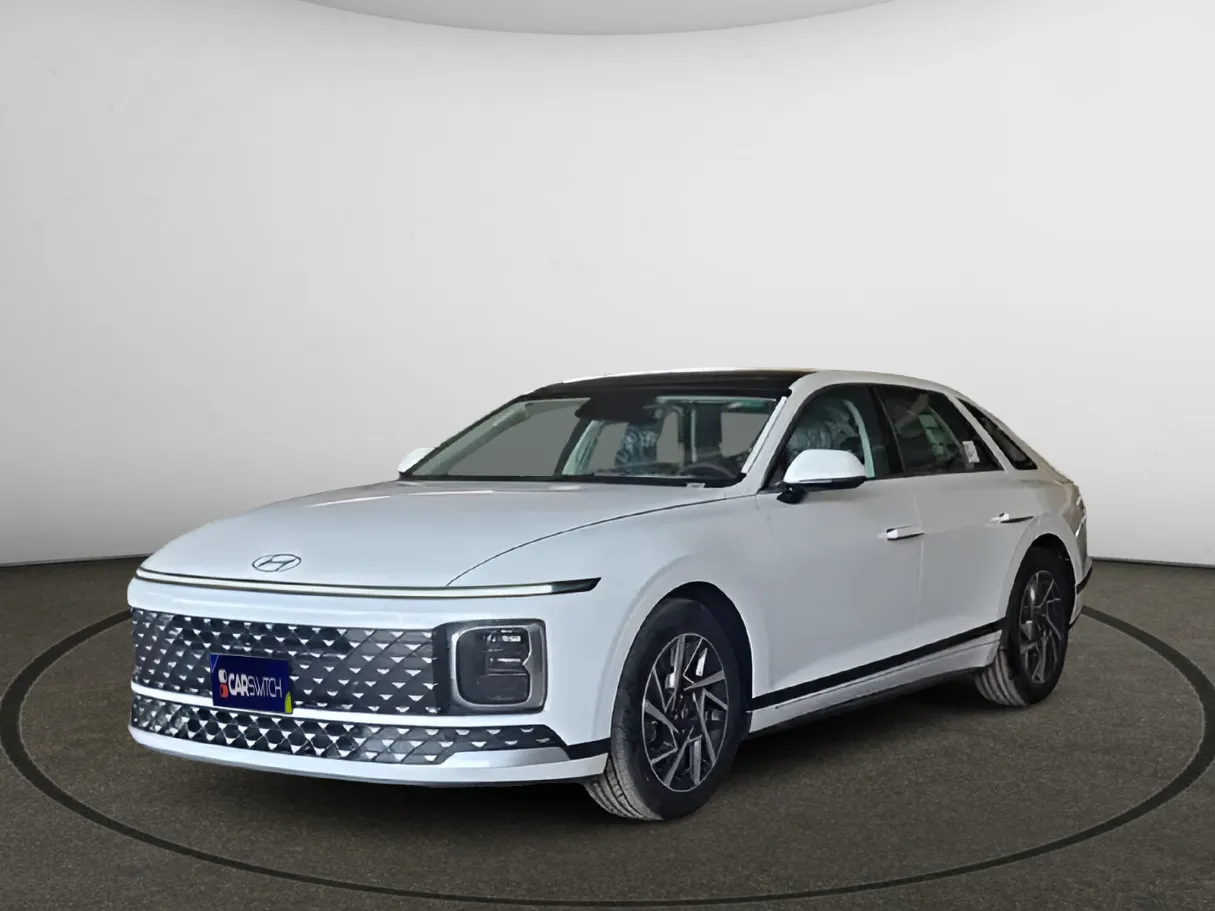
Hyundai Azera
Starting from
SAR 198,881

Hyundai Palisade
Starting from
SAR 234,531

Free online valuation — see your car's real market value in seconds, before you decide anything.

To hundreds of professional buyers, or maximise your price by letting our private buyers compete over time.

We manage it all from inspection to Absher transfer and secure payment.
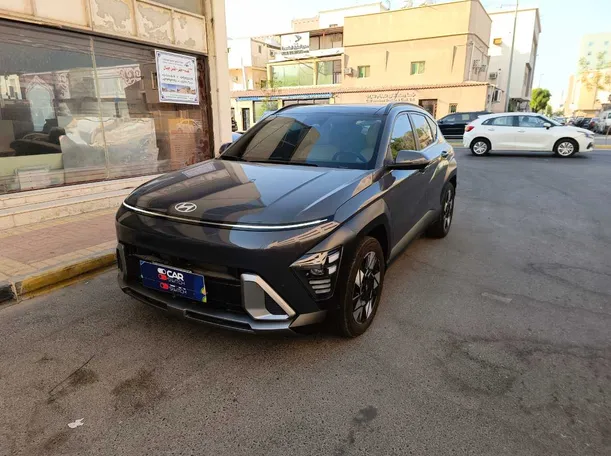
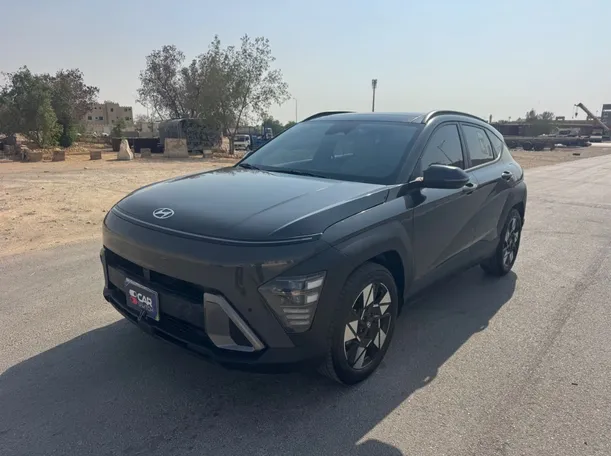
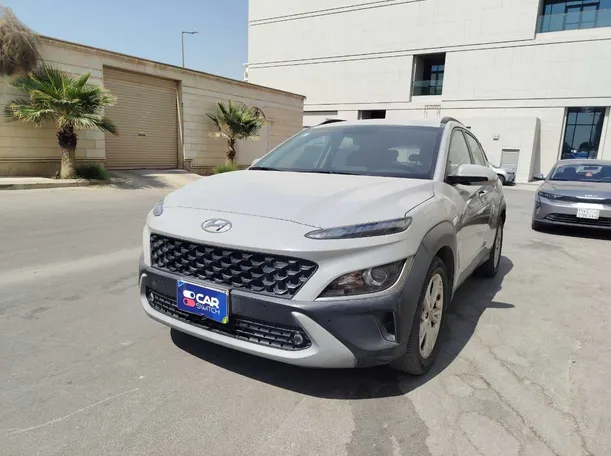
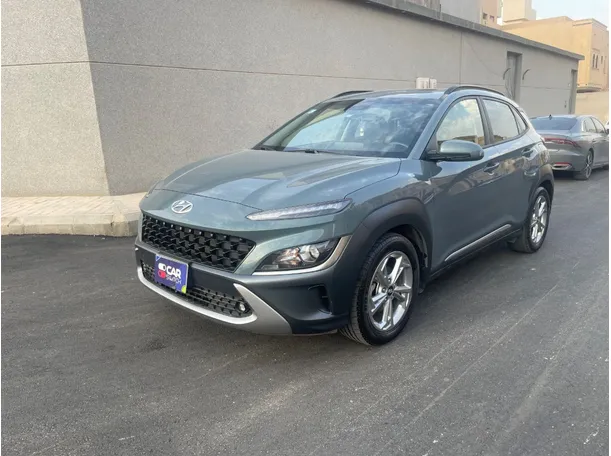
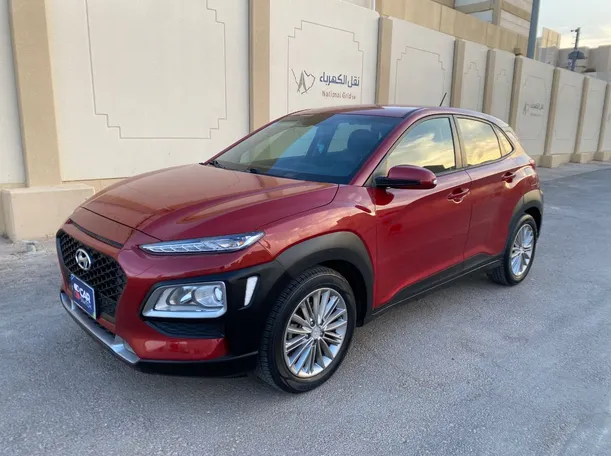
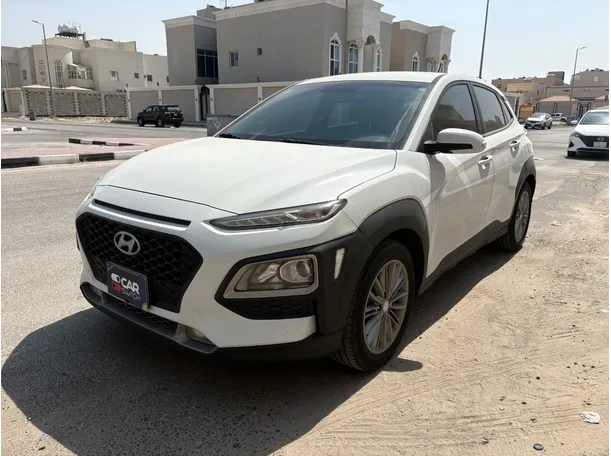
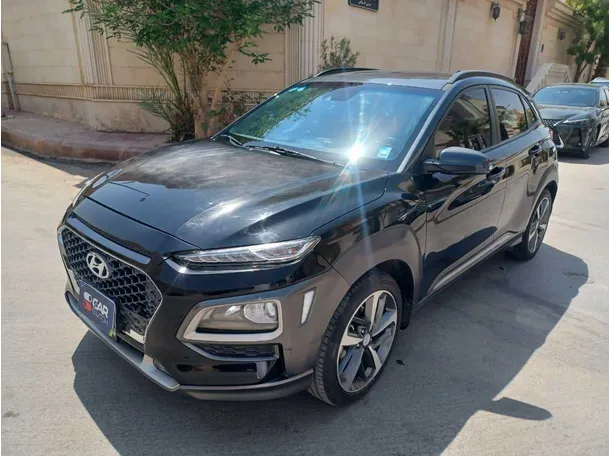
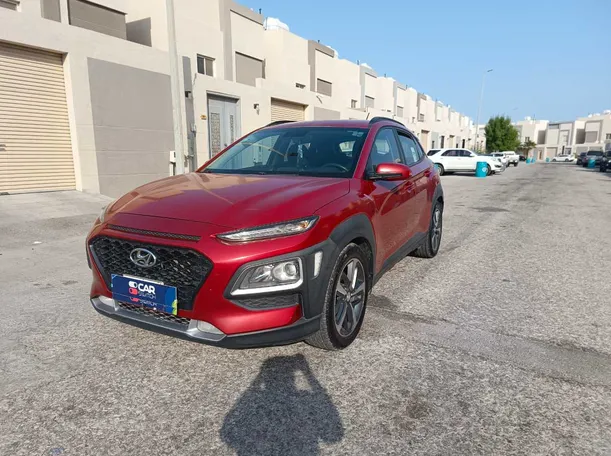
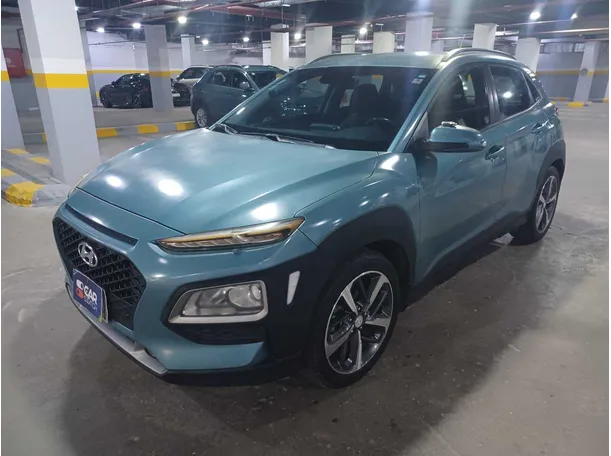
The Kona is Hyundai's most interesting-looking small SUV in Saudi Arabia, and the one with the most choice behind the badge: a 4,165 mm car sold with either a 2.0-litre petrol engine or a hybrid, and with a 544-litre load area that beats several larger crossovers. It is a full redesign rather than a facelift of the original, and the car grew significantly in the process, which is how a small SUV ended up with that much load space.
Is a used Kona the better buy?
Often. A nearly new example generally runs around SAR 60,000 to SAR 115,000, roughly 28% below the new entry price — about SAR 25,000 saved. The wide band reflects the powertrain split, so compare like with like rather than shopping on price alone.
Settle the hybrid question first, then look at the used Konas listed now.
How much does the Hyundai Kona cost in Saudi Arabia?
Six grades, two powertrains, and they interleave rather than stack. SAR 85,031 opens the range with the 2.0L A/T Fleet/L (Base); the hybrids sit in the upper middle; and SAR 114,931 buys the 2.0L A/T Ultimate/LTD (Top+), which is a petrol car again. Reading the powertrain on each grade matters more here than reading the price, because the two are not aligned.
Which Kona trim is the one to buy?
The hybrid, if you drive mostly in traffic — it sits mid-range rather than at the top, so you are not paying flagship money to get it, and city driving is where it pays back. The 2.0-litre grades are the value buy for lighter mileage and the simpler cars to maintain long term. Only the highest petrol grade approaches the price of a larger SUV.
Hyundai Kona or Kia Seltos?
Take the Kona for how it holds its money: above its segment — about 58% of its value after five years, against roughly 52% for the average used SUV in the Kingdom. It is also the more distinctive car, with the option of a hybrid its rivals here do not offer. The Kia Seltos is the more practical, squarer alternative. The Nissan Kicks undercuts both on price.
What does a Hyundai Kona cost to run in Saudi Arabia?
That depends on which powertrain you chose, and the difference is large enough to change the monthly fuel budget outright. The hybrid's high-voltage components are authorised-network work rather than something for a general workshop, so factor the servicing route into the decision; the petrol cars can be maintained anywhere and use a well-proven engine.
Does the Hyundai Kona hold its value, and what should you watch for as it ages?
Well above average — about 72% after three years, against roughly 67% for Korean cars here. On a used example, establish which powertrain you are looking at before anything else: two very different cars share this badge, and on a hybrid the battery's condition is the single most valuable thing the inspection report on that individual car can tell you.